Your Calendar Reveals More About Your Future Than Your Goals.

Every founder I meet will tell me their goals. They would say they will double their business. Go to the gym. Spend more time with family and even build a second business that runs on its own.
Then I ask a different question. What did last week actually look like? That’s usually where it goes quiet.
I’ll say the uncomfortable version first. Your goals are what you’d like to be true. Your calendar is what is true. When those two disagree, the calendar wins. It wins every single time, and it isn’t close.
This isn’t a motivation problem. The founders I’m describing are some of the most driven people I’ve met. They want it badly. They’ve written it down, said it out loud, told their teams.
And then Monday arrives and takes the week apart.
Take two founders with an identical goal. Double the business in three years. Same market, same ambition, same conviction.
The first spends his weeks solving problems. Something breaks, he fixes it. A client escalates, he handles it. His inbox is full, so he empties it. Every day is productive. Every day is also somebody else’s agenda.
The second protects a few hours each week that belong to nothing urgent. Time to think. Time with customers who aren’t complaining about anything. Time to build a relationship that won’t pay off for two years.
Three years later, the goals were the same. The calendars were not.
The first founder didn’t fail. That’s what people get wrong about him. He got very good at exactly what he practised, which is reacting. He is now the best firefighter in his company, and he built a company that needs one.
Here’s the part I think matters more, and it’s the part almost nobody says out loud.
The same thing is happening to your life.
Your calendar isn’t only building your business. It’s building your body, your marriage, your friendships, and the version of you that shows up in ten years. All of it is being decided by the same hours, and the business is the one thing in that list that will demand them loudly.
Nobody sends a reminder about your health. Your children don’t escalate. A friendship doesn’t send a follow-up when you miss it. These things wait patiently, and then one day they’ve quietly resolved themselves without you.
I’d say it plainly. A calendar with no space in it is a failing calendar. Even when the numbers are good. Especially when the numbers are good, because that’s when nobody questions it.
Listen, I’m not asking anyone to work less. That advice never survives contact with a real business, and I wouldn’t take it myself. What I’m asking is that you look.
Open last week. Not your plan for next week, that one’s fiction, everybody’s plan is fiction. Open the week that already happened and go through it honestly.
Three things to look for.
What actually got the hours? Add it up properly. Most people are wrong about their own week by a wide margin, and the surprise is the useful part.
What’s missing entirely? Look for the things you’d say matter most to you. If a priority appears nowhere in seven days, it isn’t a priority yet. It’s an intention, and intentions don’t compound.
Who set the agenda? Go item by item. Did you choose this, or did it arrive? A week where you chose almost nothing is a week that belonged to other people, however hard you worked in it.
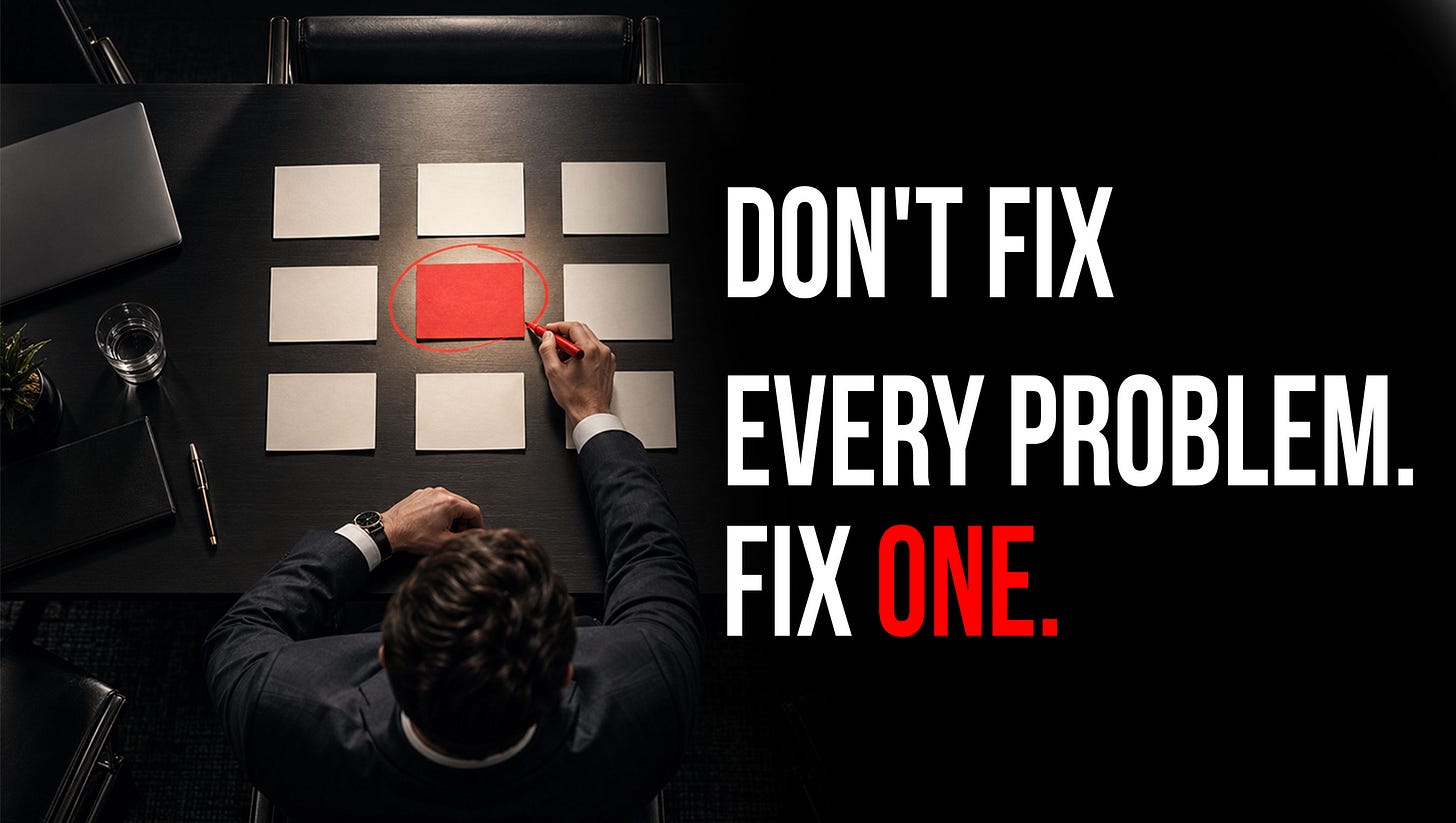
Then change one thing. One recurring block, protected, that serves something you claim to care about. One block that survives contact with a busy month.
That’s it. That’s the whole exercise.
I’ve spent years building companies designed to run without me, and people usually hear that as an operational preference. It isn’t. It was always about this.
Because if a business requires my constant presence, it isn’t really a business. It’s a job that owns me, and it will take every hour I don’t defend.
Goals are easy. Everyone has good ones. Almost nobody has a calendar that agrees with them.
Yours will build something over the next ten years regardless. The only question is whether you chose it.