Fix Your Finances: The Espresso Machine Paradox
You dropped $2,000 on a commercial-grade espresso machine. The shots still taste like burnt regret. Sound familiar? You did the same thing with your finances last January and probably called it “getting serious about money.”
The Espresso Machine Paradox is simple and brutal. You buy budgeting apps, robo-advisors, investment platforms, and fancy templates while the habits underneath stay broken. The setup looks impressive. The output is still a mess. And buying the latest upgrade felt like progress. That feeling is the trap.
It’s Not the Software. It’s You.
A founder I know subscribed to four finance dashboards at once. Not one changed a single spending decision, because the behaviour underneath never changed. The apps gave him a beautiful visualisation of his financial chaos, not a solution to it. Buying a subscription triggers a small reward that mimics solving the problem, which I call solution theatre. You perform the act of fixing without doing the work. It’s the January gym membership that makes you feel fit before a single workout. Paying $300 a year for a budgeting platform while carrying high-interest credit card debt isn’t a strategy. It’s a decoration.
What Actually Drives Your Financial Results
Four inputs drive almost everything in your personal finances.
- Spending behaviour. Are your purchases intentional or reactive?
- Savings consistency. Do you save before you spend, or with whatever survives the month?
- Debt behaviour. Are you reducing principal or just rotating balances?
- Income allocation. Does every dollar have a job, or does it just disappear?
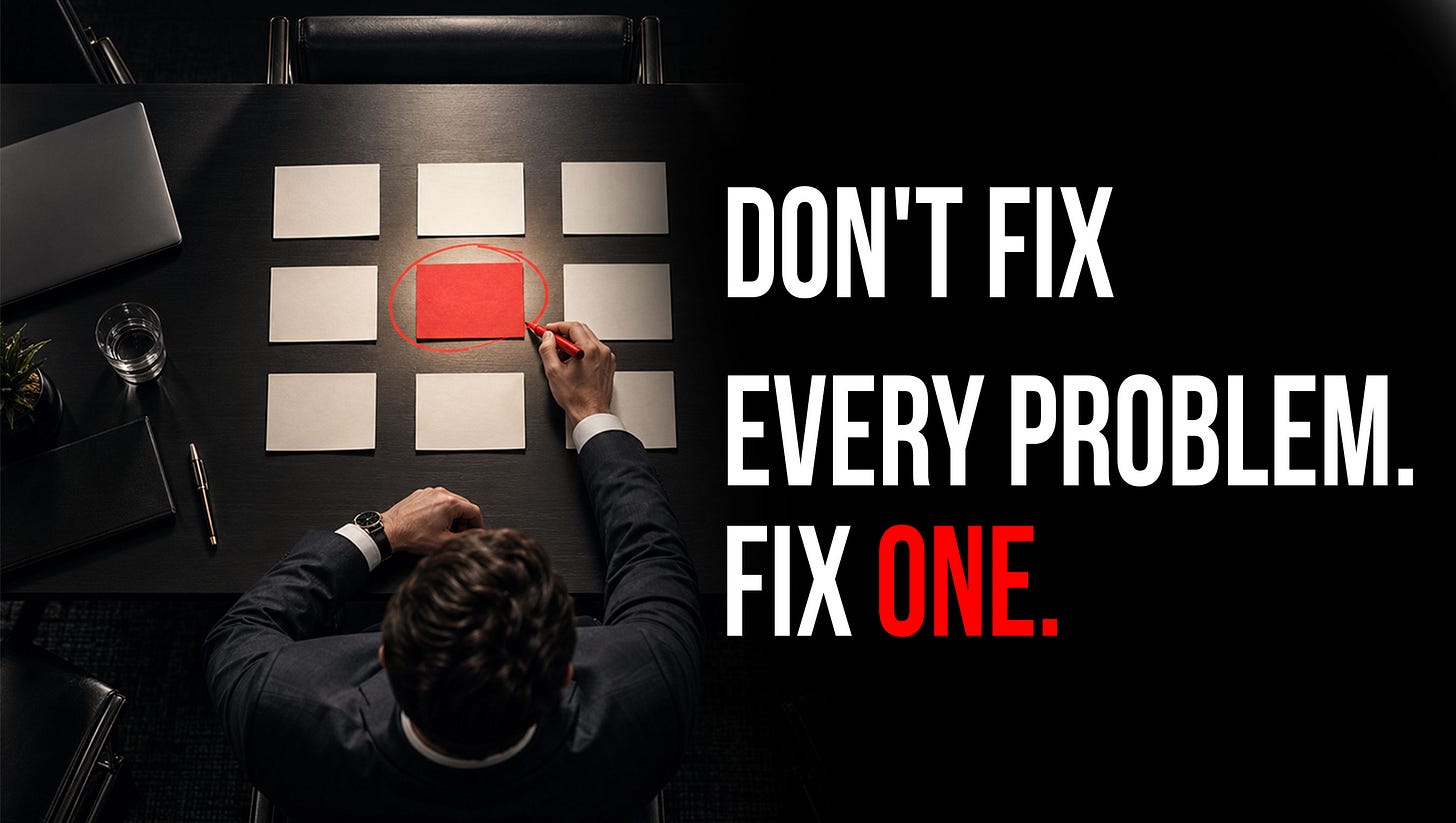
Mark each one red, yellow, or green, based on the last 90 days of actual behaviour.
🟢 Green: On autopilot. Basically handled.
🟡 Yellow: Hit or miss. It leaks.
🔴 Red: Reactive. No system at all.
Your reds are where you start. Never buy something to manage a green.
A first-generation entrepreneur I know built a seven-figure business tracking expenses in a notebook before he touched any finance app. Inputs first. Systems second.
The One Rule That Breaks the Cycle
Here is the rule worth writing down. You cannot buy or upgrade any finance system until you can show 60 days of consistent behaviour in the input it is meant to manage. Want a new investment platform? Show 60 days of consistent savings first. Want a premium budgeting dashboard? Show 60 days of tracked spending with your current free option first.
Cracking The Code
- List every finance subscription you pay for. Next to each, write one measurable behavior it has changed in 90 days.
- Mark your four core inputs (spending, savings, debt, allocation) red, yellow or green.
- Pick your lowest-scoring input. Commit to 60 days of manual improvement before adding anything new.
- Cancel anything that costs money and hasn’t changed your behaviour.
Final Thought
The fix is boring. That’s the point. You upgrade the inputs first. The systems earn their place second.
What is one financial input you’ve been trying to outsource that honestly needs fixing at the behaviour level first? That is where your real finance work starts today.